Insight
AI You Can Put in Front of a Regulator



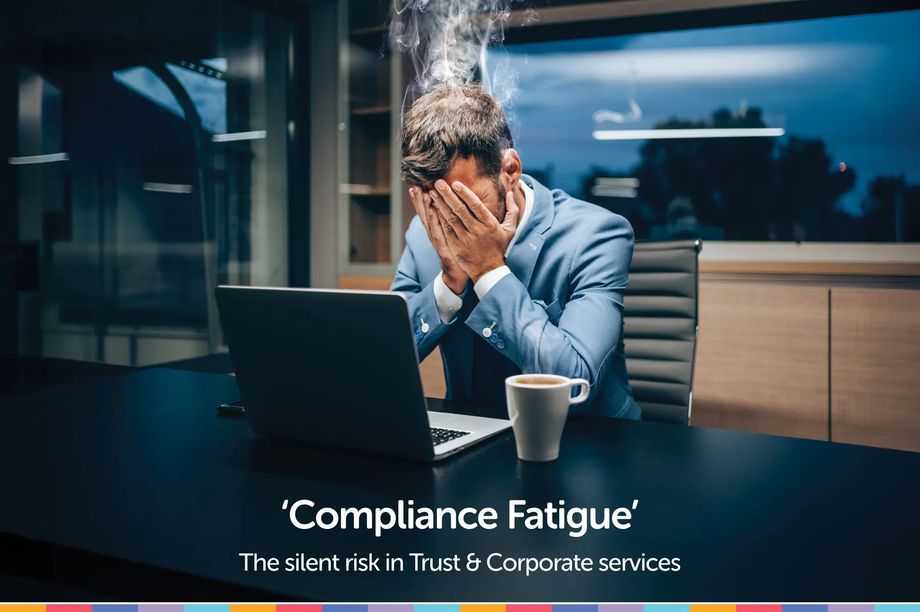
The regulatory landscape in trust and corporate services is relentless. From AML checks and CRS/FATCA reporting to Source of Wealth documentation and shifting sanctions regimes, compliance is no longer a season, it’s a constant. While systems and processes are designed to manage risk, an often-overlooked vulnerability is the people doing the work. Compliance fatigue creeps in quietly, but its effects can be damaging, for staff morale, for client relationships, and for the business.
For TCSPs and family offices, compliance isn’t a single task, it’s a network of deadlines, exceptions, and jurisdictional variations. This environment creates a perpetual pressure loop where there’s always a form to complete, a check to redo, or a regulation to re-read. For Example:
As a result, even high-performing teams start to feel reactive rather than proactive and compliance becomes a box-ticking exercise, rather than a thoughtful process.
When compliance becomes overwhelming, staff performance quietly erodes. But the signs of team fatigue can be subtle:
These issues don’t just affect output, they shape your culture. Over time, businesses risk developing an “us vs. them” dynamic between ops teams and compliance staff, eroding collaboration.
Many firms still rely on manual processes or patchwork systems. Even well-intentioned compliance policies become harder to execute if the tools aren’t up to the task.
Common friction points include:
These inefficiencies compound fatigue and increase the risk of non-compliance due to simple oversight, not negligence.
Forward-thinking firms are focusing on resilience and scalability, not just box-ticking, they invest in practical changes such as:
This isn’t about working harder, it’s about designing systems that support teams, not exhaust them.
It’s easier to manage compliance fatigue when you’re looking for it. Some preventative strategies:
Pulse check your team during busy periods (like FATCA / CRS submission season).
Track rework rates on compliance tasks, if things are being done twice, it’s a red flag.
Build buffer time into compliance reviews so teams can operate calmly and consistently.
Audit your systems: Are they helping, or hindering, your ability to stay compliant?
As the compliance landscape grows more complex, the real differentiator won’t just be who stays compliant, it’ll be who builds teams and systems that can thrive under pressure. Whether through smarter workflows, better tools, or a cultural shift toward resilience, tackling compliance fatigue should be as strategic as any regulatory framework. If you need help with systems to support your team, get in touch for an informal chat.